
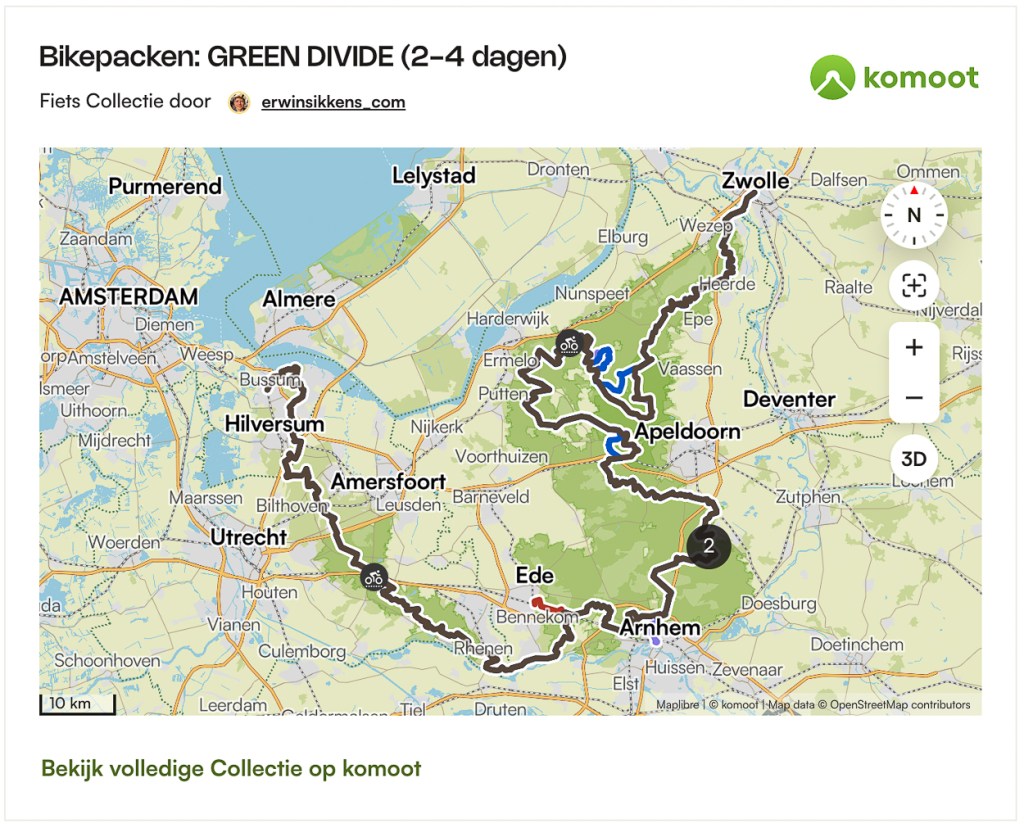
The Green Divide is the longest off-road forest cycling route in the Netherlands: a 300 KM multi-day bikepacking journey through the greenery of the Utrechtse Heuvelrug and the Veluwe, from Naarden to Zwolle. Along forest tracks, sandy paths, singletrack and gravel roads, you’ll discover just how beautiful Dutch nature can be.
This official Green Divide guide provides essential information about the route, rules, practical tips and answers to frequently asked questions.
- The Idea Behind the Green Divide
- The Latest Version of the Route
- Rules along the way
- Practical tips for the Green Divide
- Practical tips: The right bike & gear
- Practical tips: Food, drinks (and water) along the route
- Practical tips: Cyclist‑friendly accommodations & Overnight stays
- FAQ (Frequently Asked Questions)
- What others are saying about the Green Divide
- Share your Green Divide Adventure!
The Idea Behind the Green Divide
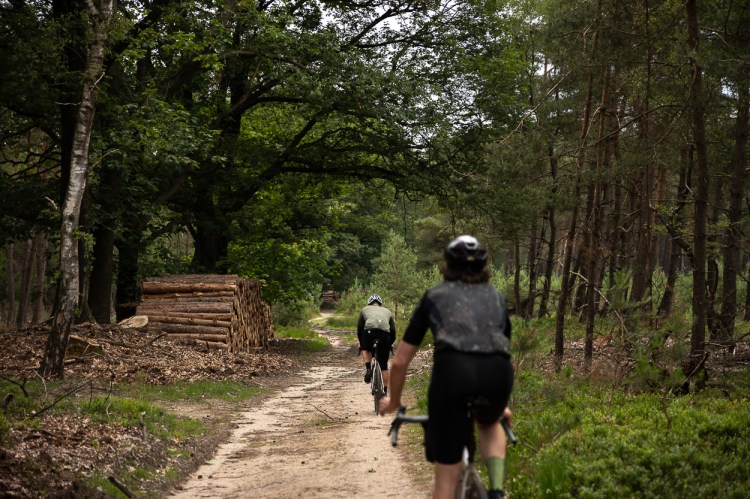
The Green Divide was never created with the idea that it would become as popular as it is today. After years of exploring and bikepacking, the first official version of the route emerged in 2021 for personal use, and for the occasional adventurer who might also enjoy it. As we now know, that personal project quickly grew into the Dutch bikepacking classic. At over 300 km, it is the largest unpaved forest adventure in the Netherlands, spanning the Utrechtse Heuvelrug and the Veluwe.
The Green Divide is designed as a multi-day bikepacking route for gravel and mountain bikers who carry their own gear and wish to spend several days immersed in nature. The route is intentionally designed for enjoyment and slowing down; it is not suitable for gravel racers or performance-oriented riders. With winding, hilly, unpaved terrain, frequently on shared trails, it’s a route not to be underestimated. Two days is sporty, three days is realistic, and the more days you invest, the more you will truly enjoy it. Note that the route is not waymarked: you ride it using a GPX track.
The Latest Version of the Route
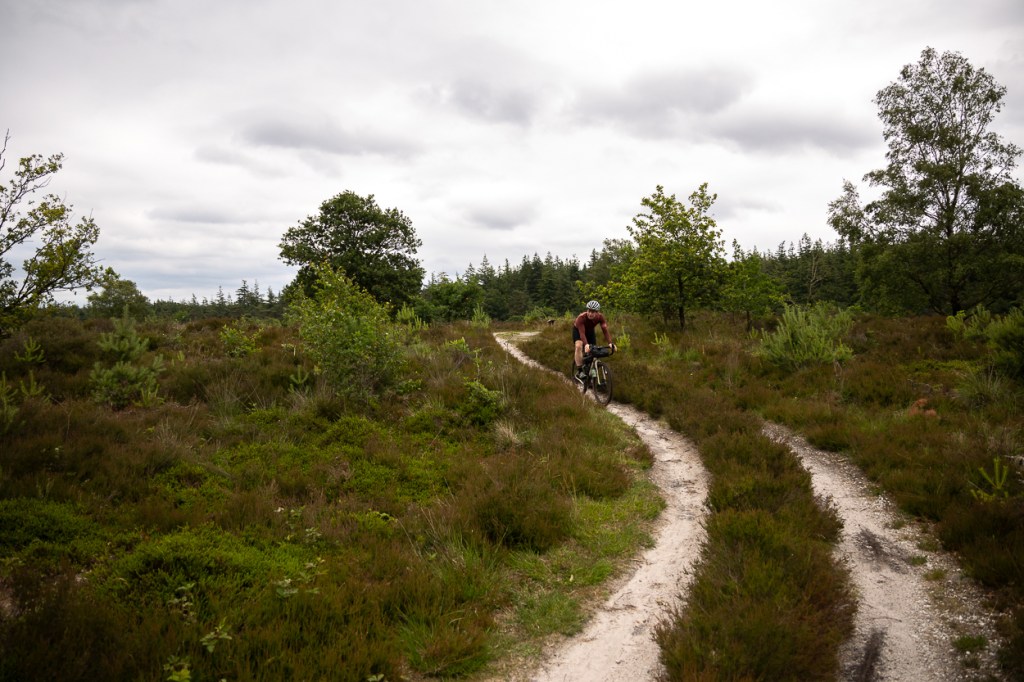
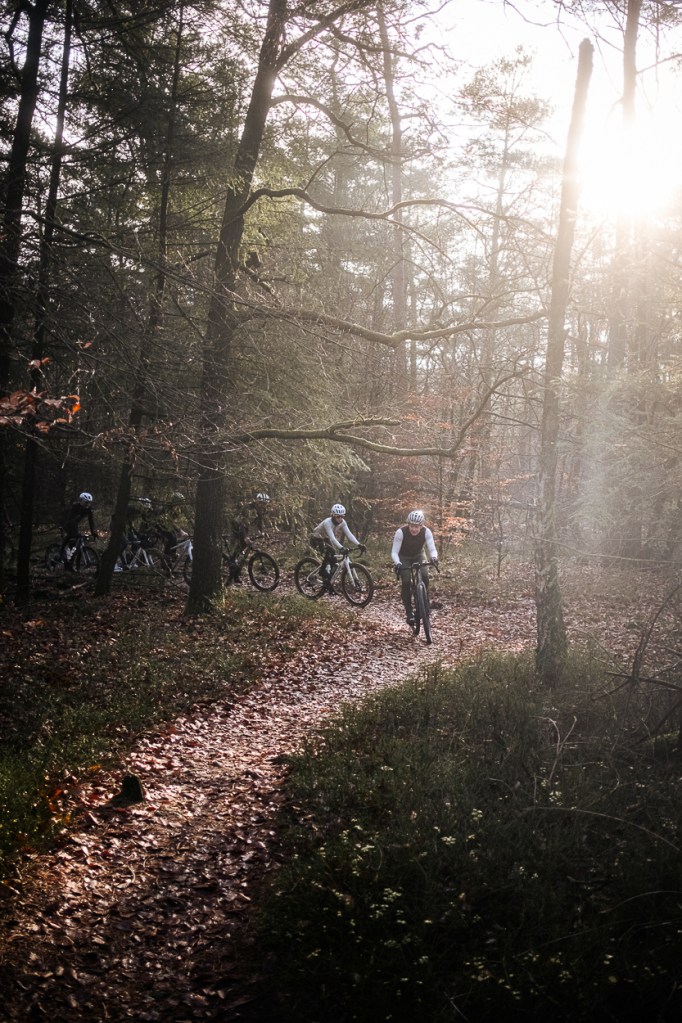
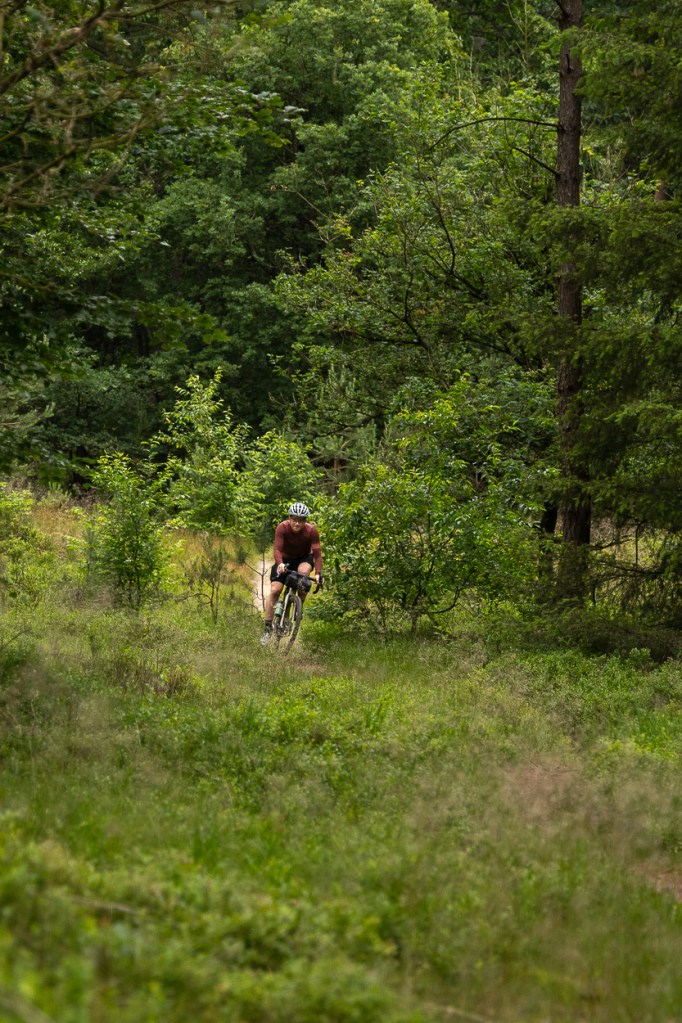
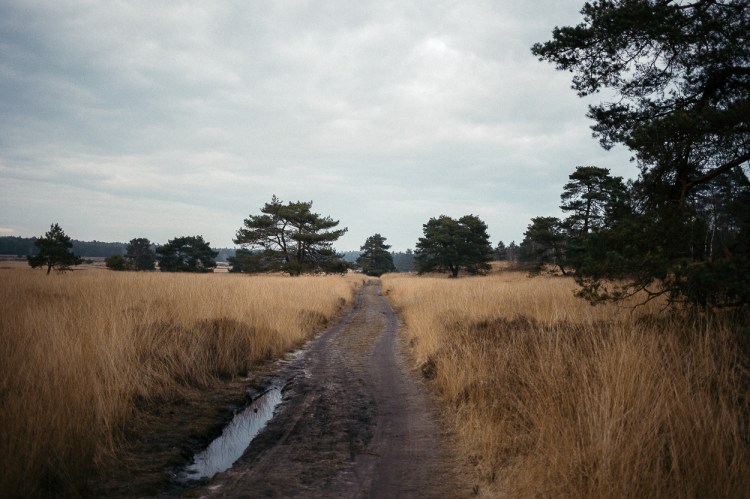
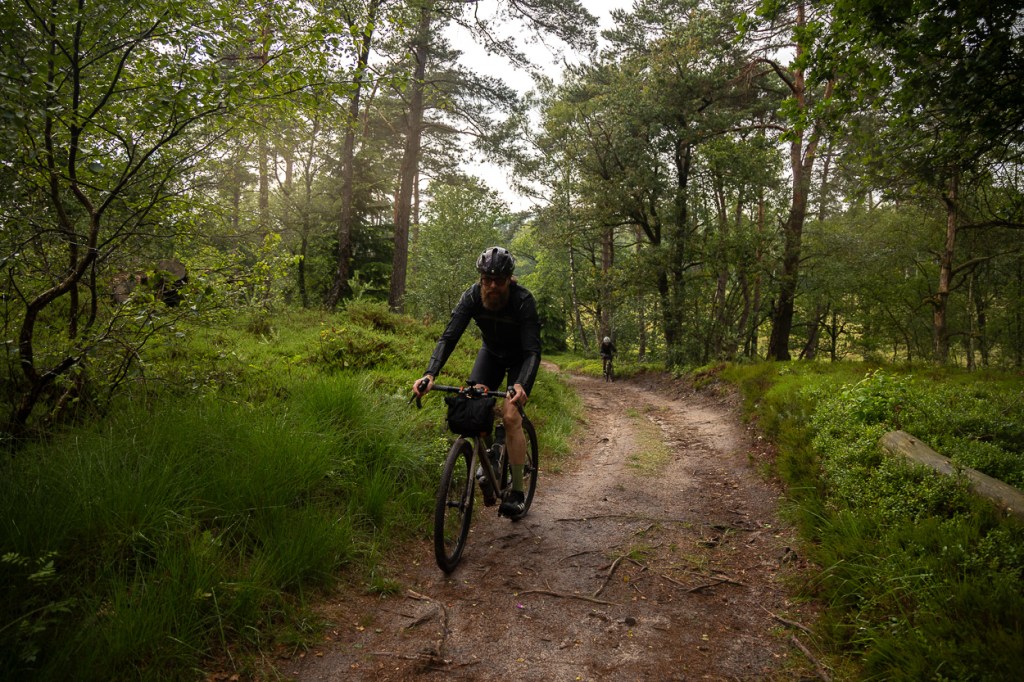
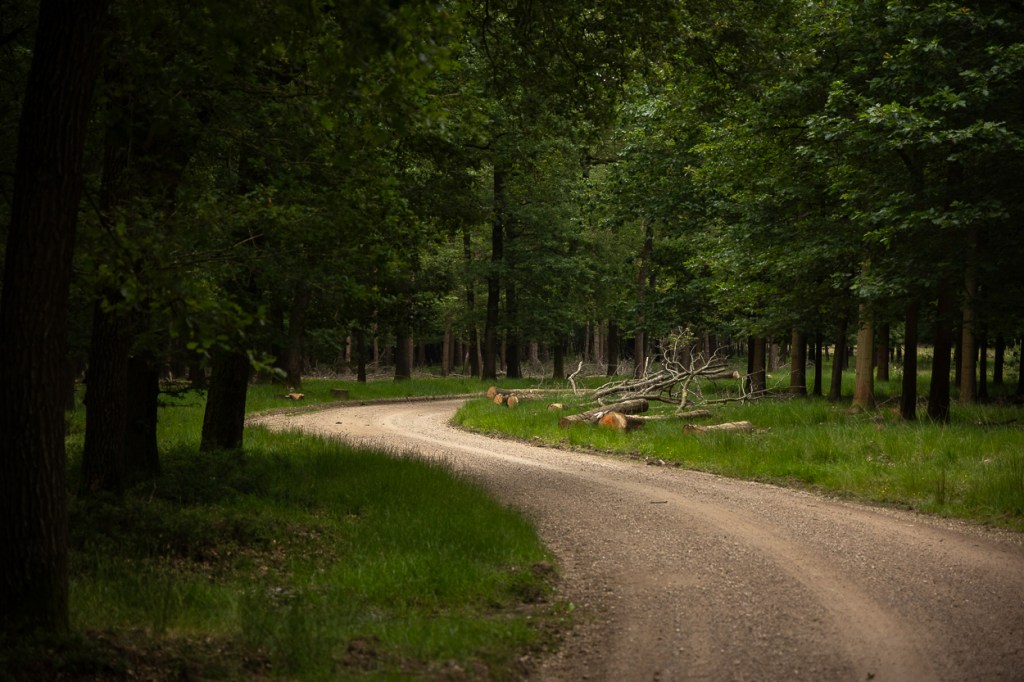
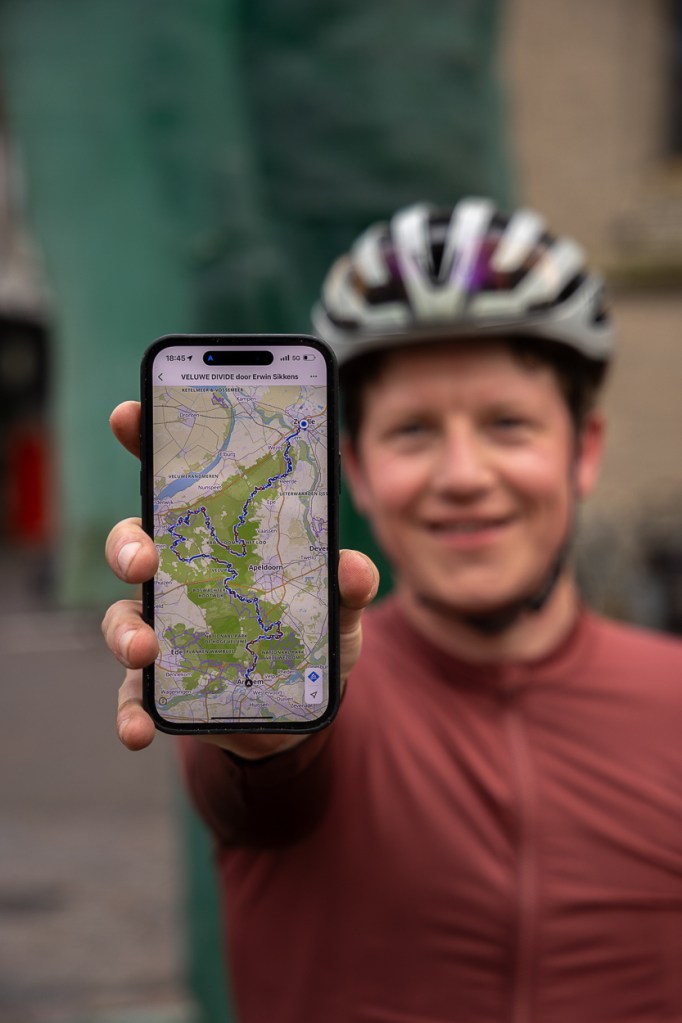
The idea behind the Green Divide route has been the same from the very beginning, yet the route itself is constantly evolving. It runs (train-friendly) from Naarden-Bussum station to Zwolle. Along the way, you are continuously riding through green landscapes. It starts out gently on the solid gravel paths of the Goois Nature Reserve and the rolling hills of the Utrechtse Heuvelrug. From the Veluwe onwards, the riding increasingly shifts to a mix of hard and occasionally sandy forest tracks, gravel roads, and even singletracks.
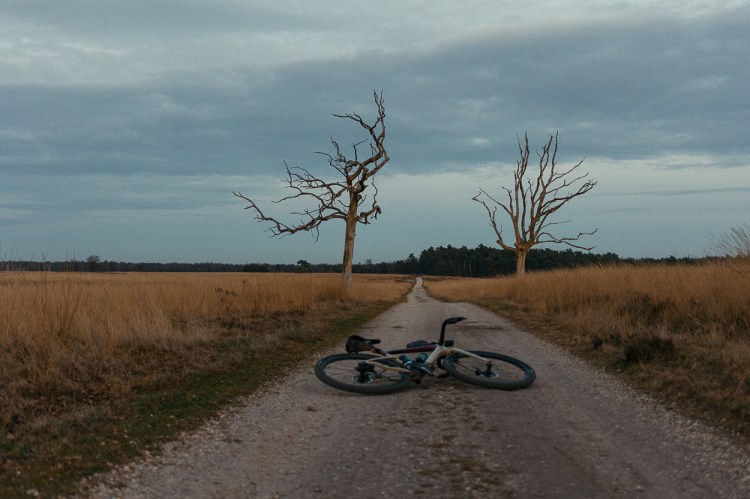
On the Veluwe, the route passes, among other highlights, through the Deelerwoud with its iconic dead trees, also known as the national gravel monument; the beautiful Loenermark; the perfectly surfaced gravel of Kroondomein Het Loo (Crown Estate); and the fairytale-like Speulderbos. Even so, the route is still constantly changing, due to path closures or changes in forest access regulations. Never rely on loose GPX files or previously ridden tracks; always follow the official Green Divide route on my Komoot profile. That way, you will always stay on the right track.
In the Green Divide route collection on Komoot, you will also find the Heuvelrug Divide and Veluwe Divide: more accessible adventures for beginner bikepackers or grand gravel rides for a single summer day.
Rules along the way
The Green Divide uses paths in nature where we are guests among flora, fauna, and among each other. Unfortunately, recreational conflict is one of the main reasons why some cycling access in Dutch nature is increasingly restricted for cyclists. To help keep gravel riding and the Green Divide route open and accessible for the future, a few essential rules apply, in accordance with the Dutch Gravel Code.
Expand for details
Be nice, say hi.
Most recreational conflict is caused by pedestrians or riders of horses being startled, usually due to a difference in speed. Slowing right down and greeting others politely really helps. Avoiding conflict is the most effective way to prevent access closures, and it’s also simply more pleasant.
Do not race or ride in large groups.
Many of the shared (walking) trails on the route are not suitable for high speeds or large groups. Keep your company small and friendly. If slow riding is not for you, the Green Divide is also not for you. Organised rides with commercial intent are not permitted on the route without permission from me and the relevant land management organizations.
Do not ride in the dark, or go wild camping
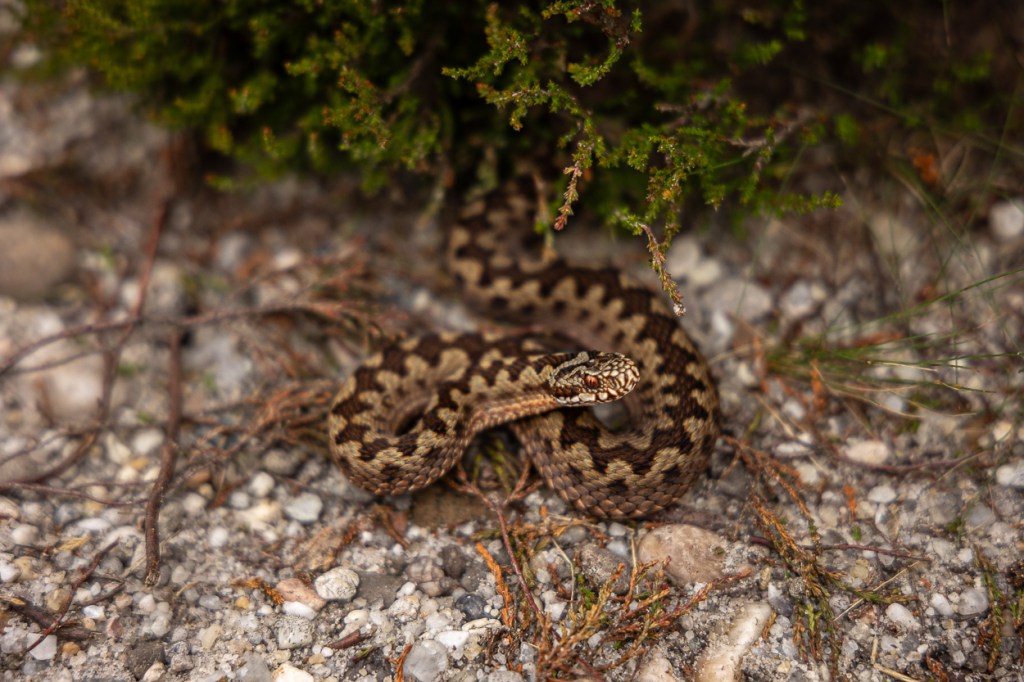
Most paths used in the route are not accessible at night: after sunset, until sunrise. After dark wildlife considers what little nature we have as safe. Riding or camping unexpectedly disturbs both animals and the already sensitive relationship between riders and land managers. This may result in big fines or worse: access closures.
Stay on track
Free riding off designated paths is generally not permitted in nature. The Green Divide consciously uses open, permitted trails. While I keep the route as up-to-date as possible, you are always responsible for your own adventure and must respect access signs. As they are written in Dutch, be sure to have a translation app like the Google App installed on your phone.
Use the Brown Divide track from September 15th to December 24th
The Green Divide route makes use of trails on Kroondomein Het Loo (Crown Estate) of which big parts are closed during the autumn hunting season. To accommodate riders who love riding in autumn until Christmas, I developed the Brown Divide, an adapted version of the Green Divide. The Brown Divide replaces several Kroondomein trails on the central Veluwe with alternative, equally beautiful routes. In autumn, for example, you ride along stunning unpaved heathland tracks near Vierhouten that are not featured in the Green Divide. This way, you can fully enjoy the richly brown-coloured landscape in autumn.
Riding the Green Divide is free, but a ‘thank you’ is always appreciated
I keep the route up to date with great care and dedication. If you want to share your gratitude, you can share your adventures on Instagram via @green.divide and treat me to a cup of coffee for the effort via Buy Me A Coffee. I truly appreciate it. 🙂
Practical tips for the Green Divide
Cycling more than 300 km off-road with over 1300 metres of climbing is stunning, but also tough by Dutch standards, especially with all the sand. Prepare your bikepacking adventure well to ensure a wonderful trip. Below are some practical do’s and don’ts for riding the Green Divide, from gear to food, water and overnight options.
Practical tips: The right bike & gear
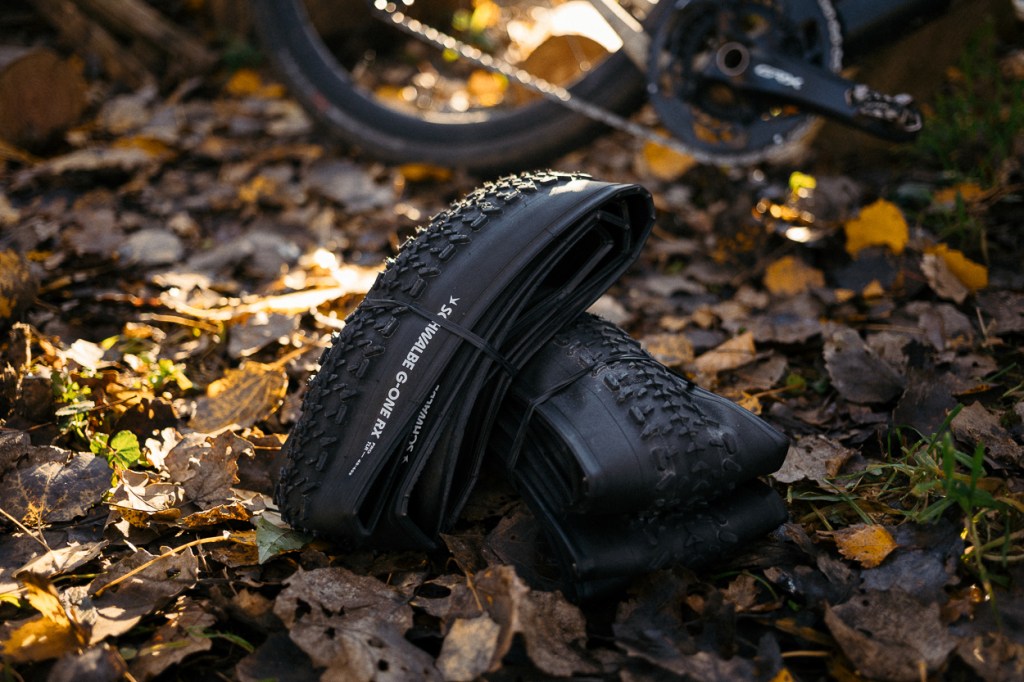
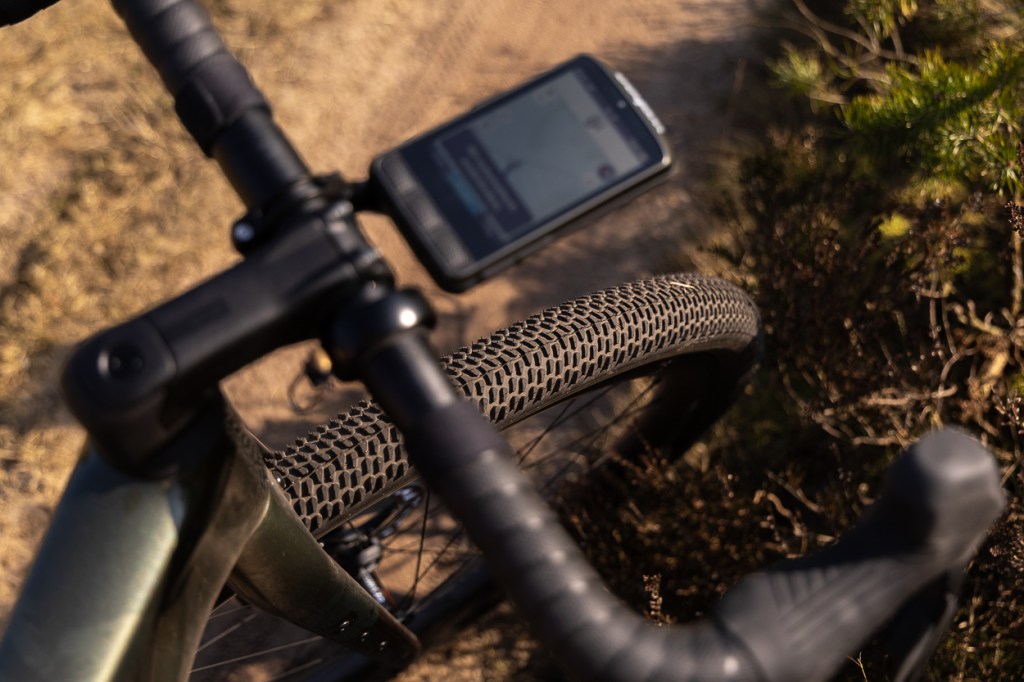
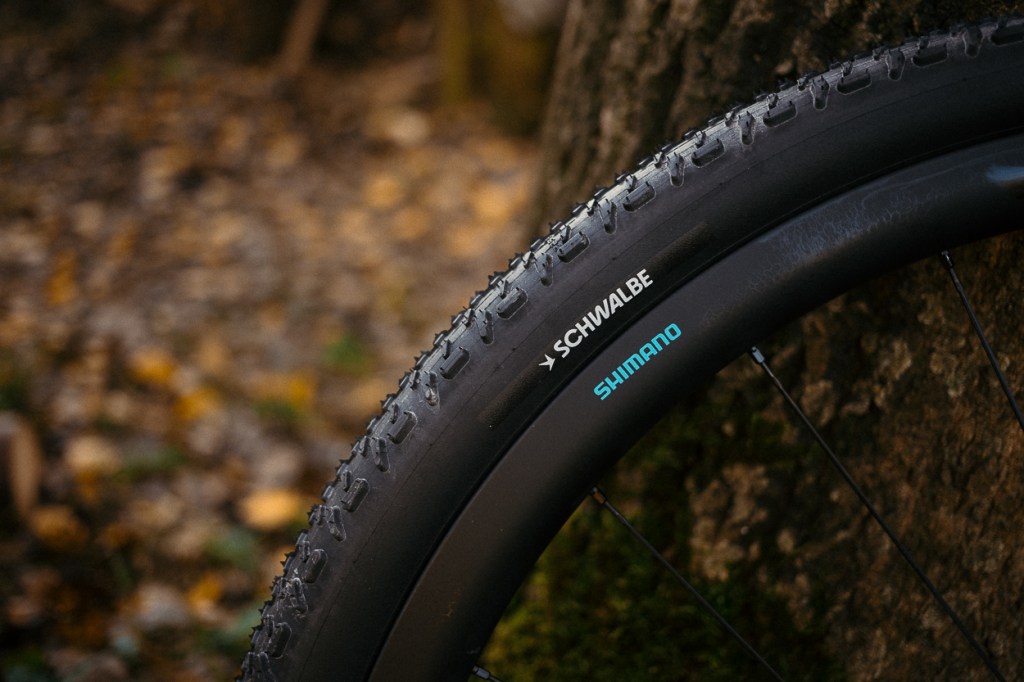
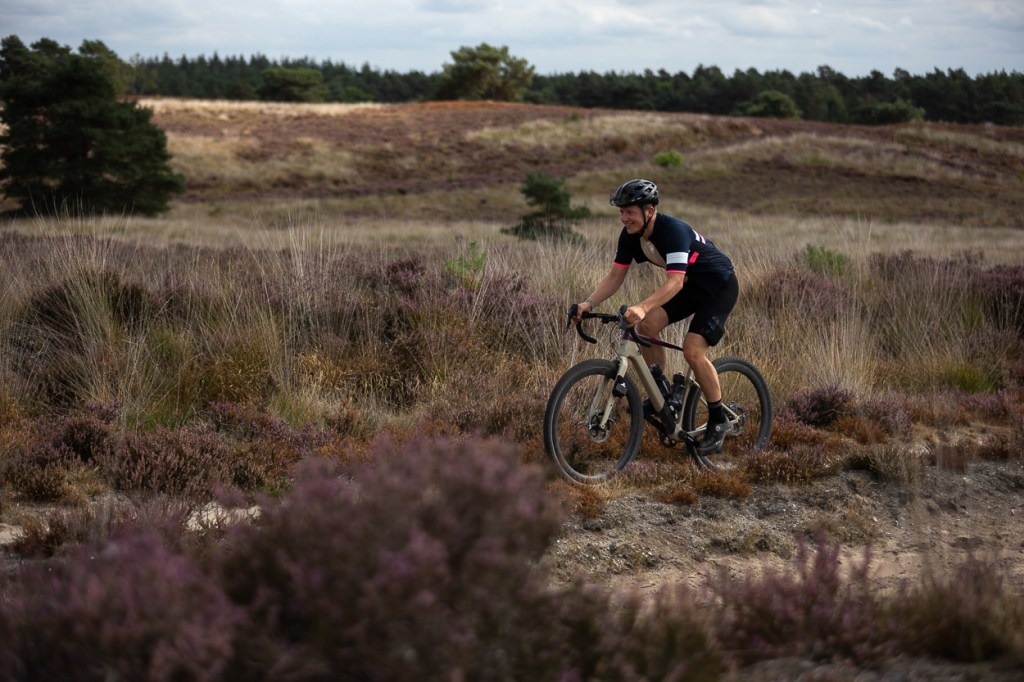
Given the variety of surfaces, from firm gravel to technical singletrack, a gravel bike is the most suitable choice for the Green Divide. A mountain bike will also suffice. A road bike or touring bike is not practical. For tyres, a minimum width of 40 mm is recommended, though 45 mm or even 50 mm is preferable, ideally set up tubeless. The choice of tire tread should match conditions. Personally, I ride with Schwalbe G-ONE R tyres, but switch to Schwalbe G-ONE RX tyres in autumn for increased grip on loose or muddy ground.
Ensure you check your bike thoroughly before departure, carry essential tools and spare parts. Remember that bicycle workshops mostly solve mechanical issues by appointment only. However, along the route are some Shimano Service Centres you can check in worst case scenarios.
A few Shimano Service Centres along the route:
Broers Soest, 2-Wielercentrum Ede, Roelofs Arnhem, Fietspro Eerbeek, BCE Bikes Putten, Stappenbelt Apeldoorn, Fietsspecialist Nunspeet, Van de Put Heerde.
Just before the finish in Zwolle, you’ll ride past the Ride Fast Bikeshop in Hattemerbroek, run by cycling friend Thijs.
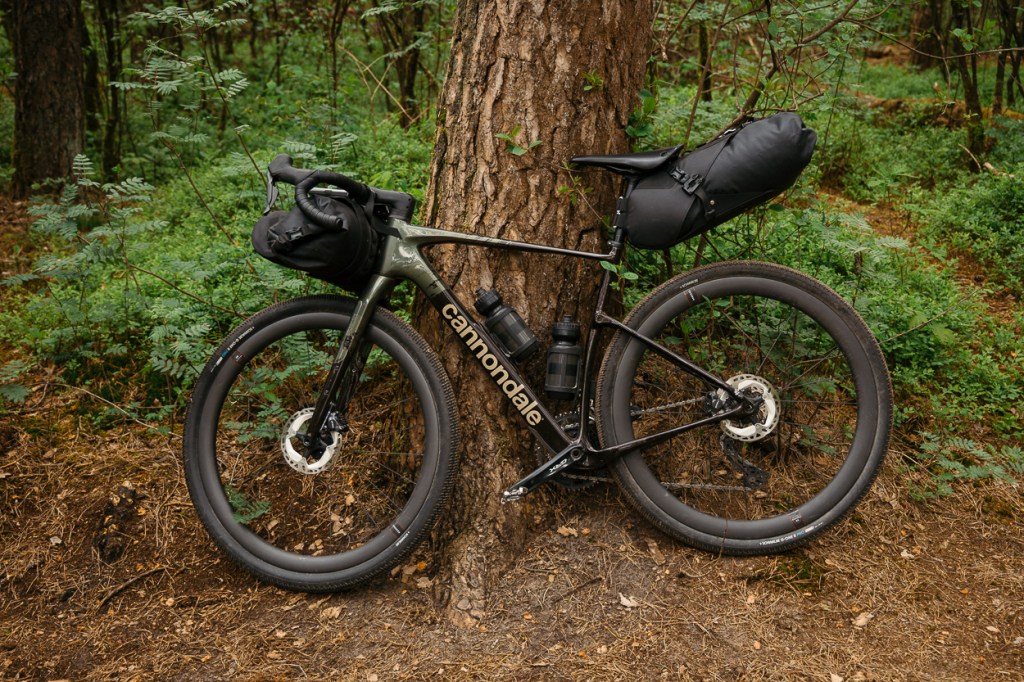
Of course, don’t forget a fully charged bike computer with the route preloaded, such as a Wahoo ELEMNT Roam. If your campsite or hotel is off the route, plan your route in Komoot in advance using legal paths so you don’t run into problems. A good set of bikepacking bags makes the adventure much more enjoyable. Waterproofing is often the biggest challenge. When in doubt, put your belongings in dry bags to avoid a wet tent or soggy socks.
Practical tips: Food, drinks (and water) along the route
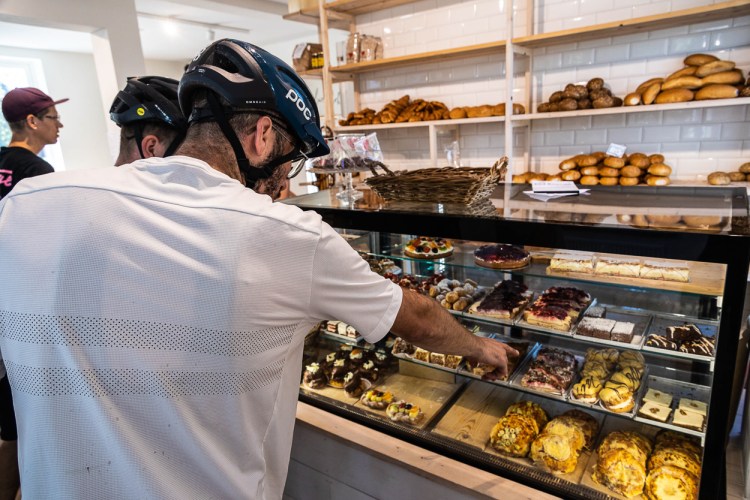
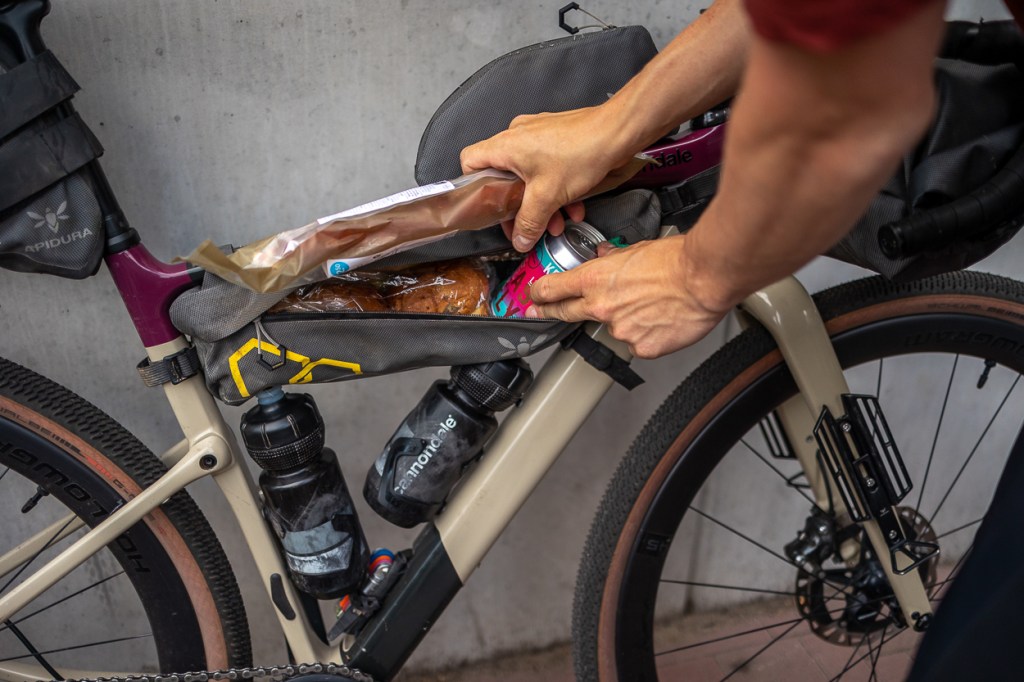
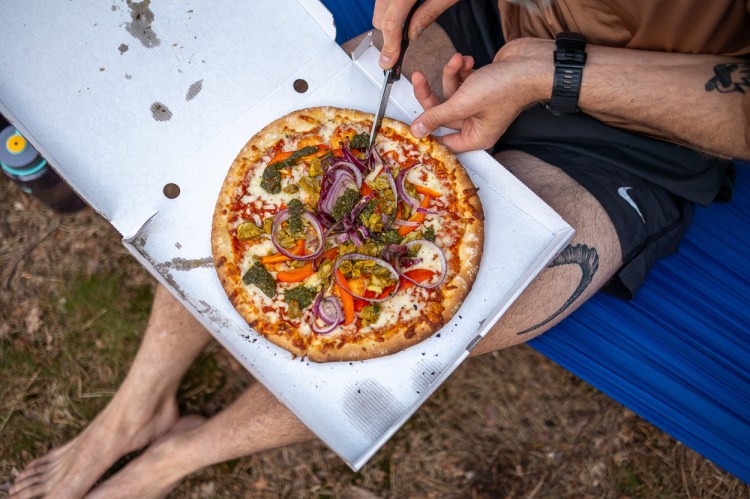
Although the route passes through natural areas, you will regularly come across cafés, small villages, and other stops where you can take a break, refill your bottles, and grab something to eat. Still, especially on warmer or colder days, it’s wise not to underestimate how many kilometres you can sometimes cycle continuously through the forest without access to food or drink. It is therefore always important to be well prepared with enough water and snacks.
Google and AI tools are still not completely reliable. The search function in the Komoot planner, however, is far more practical. With the route displayed, you can easily find what you need along the route. From places to eat or sleep to practical necessities like water points along the way. When venturing slightly off the route into villages, facilities are usually quickly available. Using the Komoot search function, you can plan your route legally and conveniently around your points of interest. Naturally, you’ll want to eat and drink without leaving the route whenever possible. Below are a few useful stops directly on the route.
Goois Nature Reserve & Utrechtse Heuvelrug
Train Station Naarden-Bussum (KM 0)
Forgot something at home? At the official starting point of the route, Naarden-Bussum Train Station, there are a few facilities available, such as a coffee café. There is also a water tap outside in front of the station building for filling your bottles. In addition, several supermarkets can be found in the immediate vicinity, the town of Bussum.
The town of Lage Vuursche (KM 32) & Buiten in de Kuil (KM 33.5)
In the small town of Lage Vuursche (home of our former Queen: Princess Beatrix), you’ll find several cafés and restaurants. However, it is also a fairly well-known and therefore busy tourist village. A better option might be to cycle a little further along the route and stop in the forest at the beautifully situated ‘Buiten in de Kuil’. It can also be busy here, especially at weekends, but they are used to cyclists, and at the very least you can refill your bottles.
Website: https://www.buitenindekuil.nl/
Café Restaurant Soesterdal, Soesterberg (KM 46)
You’ll find this spacious café‑restaurant pavilion immediately after crossing the runway of the former Soesterberg airbase. You can sit either on the large outside terrace or inside. Your bike will be just out of sight, so bringing a lock might be a good idea.
Website: https://soesterdal.nl/
Coffee café and lunchroom Heerlijk, Maarn (KM 57)
A little tucked away on the right-hand side of the road, this fairly new lunch spot is perfectly located on the Utrechtse Heuvelrug, just before you enter 16 kilometres of ‘nothing’. The owners are very welcoming to Green Divide cyclists. In addition to coffee, lunch, and even local products to take on the go, there is an outdoor tap so you can refill your bottles even outside opening hours.
Website: https://heerlijkheuvelrug.nl/
Cycling café de Proloog, Amerongen (KM 73)
At De Proloog, cycling is at the heart of the experience, and as a cyclist, you are naturally the guest of honour. This makes De Proloog a perfect spot for a stop: coffee, a piece of cake, or lunch. They also very conveniently sell a selection of sports nutrition and spare items such as inner tubes. Handy if you happened to forget something at the start. After De Proloog, there is a stretch along the route where you won’t come across any facilities for a while.
Website: https://deproloog.cc/
Gulf gas station, Rhenen (KM 89)
This petrol station at the traffic lights in Rhenen is by no means a stop for the atmosphere, but it is directly on the route. I mention it because for the next several dozen kilometres, it is the last opportunity to stop without leaving the route. Still, I think it’s better to plan your stops more deliberately, perhaps by venturing slightly off the route to make a stop in, for example, the centre of Wageningen. For those who are curious: this petrol station sells sandwiches, bars, and bottled drinks, just like any other petrol station.
Veluwe
Bike & Eat, Loenen (KM 155, just off the route in town)
Although Bike & Eat is slightly off the route, this cyclist‑friendly stop, situated near the midpoint of the route, is definitely worth a visit. The always friendly Daphne and Barney rent bikes for the day and have space both inside and outside for anyone looking for food and drinks, or even an ice cream. They also sell sports nutrition and, of course, will gladly refill your bottles.
Website: https://www.bikeandeat.nl/
The town of Beekbergen (KM 167)
Although the route does not officially pass through the centre of Beekbergen, you will find several cafés and a supermarket there, very close to the route. Just outside the village, you cycle past the Spelderholt estate. At the hotel‑restaurant there, you can also grab something to eat or refill your bottles.
De Garage, Radio Kootwijk (KM 182) & Cafeteria Halte Assel (KM 188)
The former garage building right next to the iconic Radio Kootwijk Building A, is just as atmospheric as the name suggests: not at all. Even the terrace is little more than a paved courtyard. Opening hours are also not always reliable, and De Garage is often closed during the winter months. Still, I always enjoy stopping at De Garage, especially on warmer days, as it’s beautifully set right in the middle of nature.
Website: https://www.garage-radiokootwijk.nl/
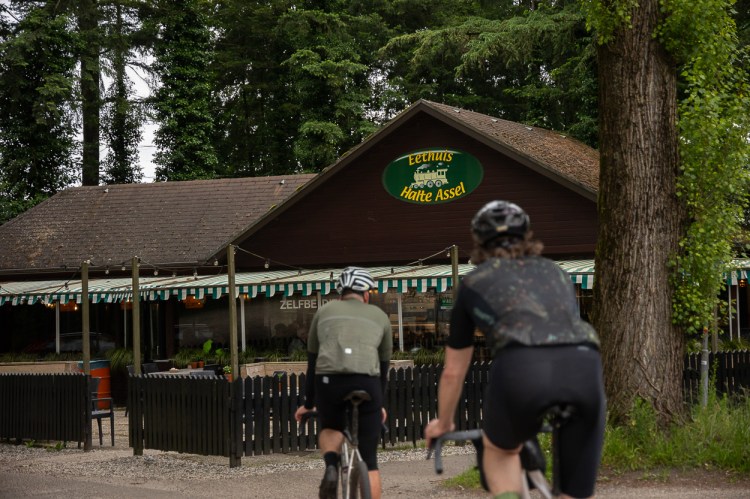
A place that many might not understand, but which has earned a lot of love from me, is Halte Assel, a snack bar located on the site of a former train station. While De Garage is sometimes closed, Halte Assel is seemingly always open, and pleasantly busy all year round. They have everything you’d expect from a café‑style eatery. You can take a seat on their large outdoor terrace, or one of the few indoor seats. Very handy is their toilet with an outdoor tap just to the left of the building, which you are welcome to use for free.
Website: https://www.halteassel.nl/
Note: after Halte Assel, the Green Divide and Brown Divide routes split. Below, I refer to the cafés and kilometre markers for the Green Divide, but a lot of these spots can also be found along the Brown Divide route.
Lunchroom Aardhuis (KM 195)
This former royal hunting lodge is situated on one of the highest points of Kroondomein het Loo (Crown Estate). Today, it serves as a very charming lunchroom set in the middle of nature. Reservations may be necessary, especially on weekends. If they have space, this historic Royal family lodge is certainly worth a visit. Please take your time to freely roam the first floor, which serves as a kind of museum.
Website: https://www.edlaardhuis.nl/
The town of Garderen (KM 206)
Right on the route, you’ll find Brasserie ’t Genot van Garderen and, just across the street, Cafeteria De Bourgondiër. Both offer food and drinks for passing cyclists, before you soon enter the Speulderbos. Just south of the route, the village has more cafés and two supermarkets: PLUS and SPAR.
After Garderen, you won’t come across any facilities for about 40 kilometres directly on the route. This makes the village a perfect spot for a stop.
The town of Elspeet (KM 246)
After Garderen, Elspeet is the first village where you’ll suddenly find food and drink options again. Directly on the route, you cycle past Pannenkoekenhuis 1760 (which has an outdoor tap) and restaurant Op de Brink. About 400 metres off the route, on the southern side of the village, you’ll also find the locally famous bakery Bakker Piet and a PLUS supermarket for resupply.
After Elspeet, you’ll ride again for several dozen kilometres through nature without coming across any facilities directly on the route.
Restaurant Ossenstal (KM 281)
In the middle of nature, you’ll suddenly cycle past (pancake) restaurant De Ossenstal. This fairly large restaurant has plenty of space both inside and outside, making it a good stop for lunch, a pancake (or something else), or simply a drink. Of course, it’s also a convenient place to refill your bottle with water.
Website: https://ossenstal.nl//
Finish at Bennies, Zwolle (KM 208)
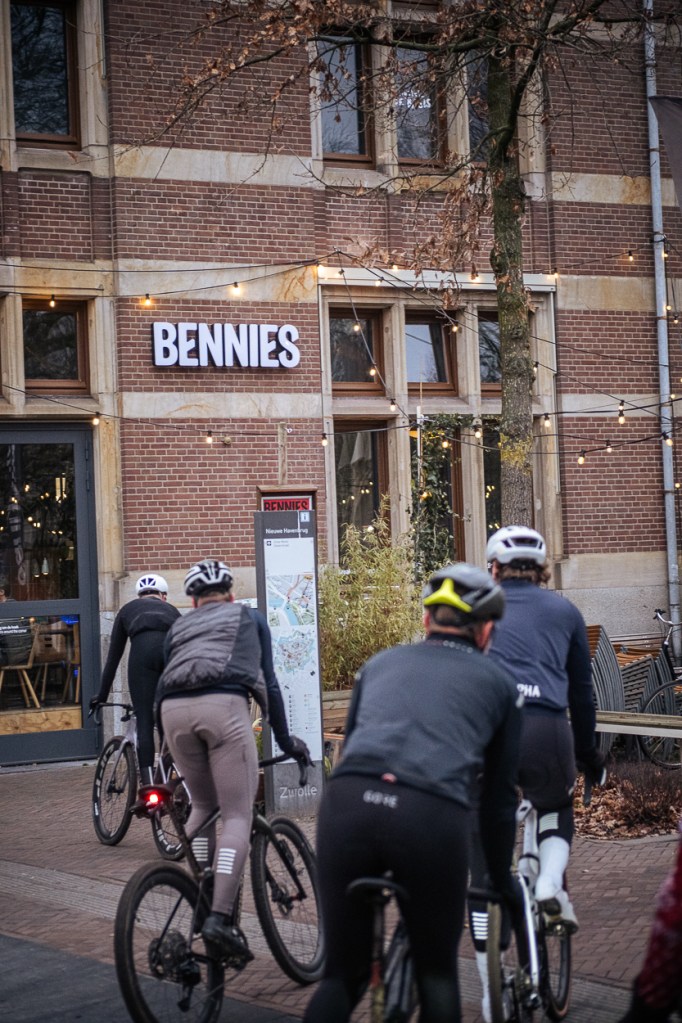
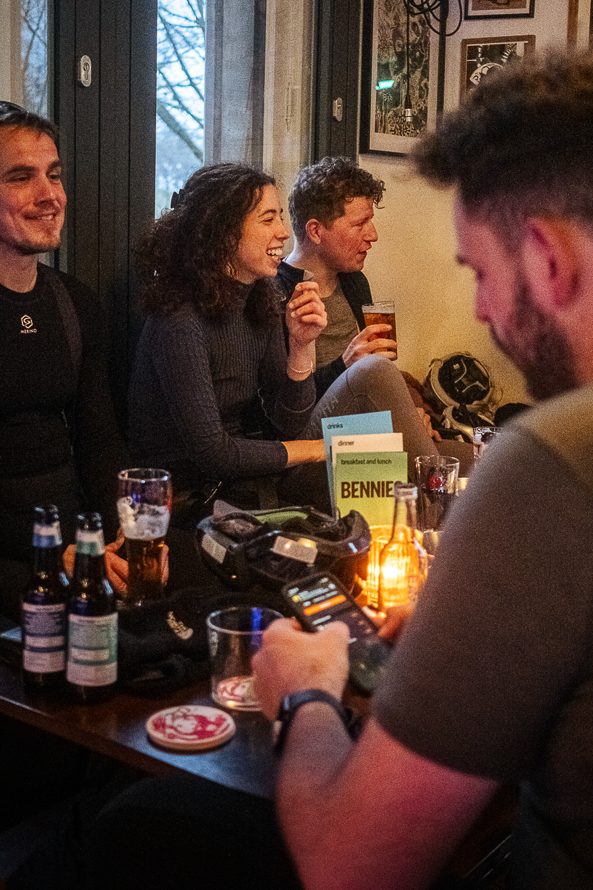
Although the official finish of the route is at the Grote Markt in Zwolle, I highly recommend easing off the pedals just before at Bennies. The owner is a cyclist, so (if you ask politely) you can usually keep your bike inside. They also have a great kitchen and, on top of that, delicious craft beers on tap. For me, Bennies is the perfect place to finish the Green Divide.
Website: https://bennieszwolle.nl/
Those who are tired or simply want to celebrate the ride a little longer can also stay overnight. Bennies is part of the hostel ‘De Basis’, which is housed in the same building.
Website: https://debasiszwolle.nl/en/
Practical tips: Cyclist‑friendly accommodations & Overnight stays
The Green Divide passes over the Utrechtse Heuvelrug and the Veluwe, both popular tourist areas with a wide range of campsites and hotels. Still, there are overnight options that stand out, either because they are particularly cyclist‑friendly, or simply perfectly located. Here are the key tips: be sure to book your accommodation in advance during the summer, as availability can be limited or even nonexistent in peak season. In the autumn and early spring, always check first whether campsites are open.
Camping
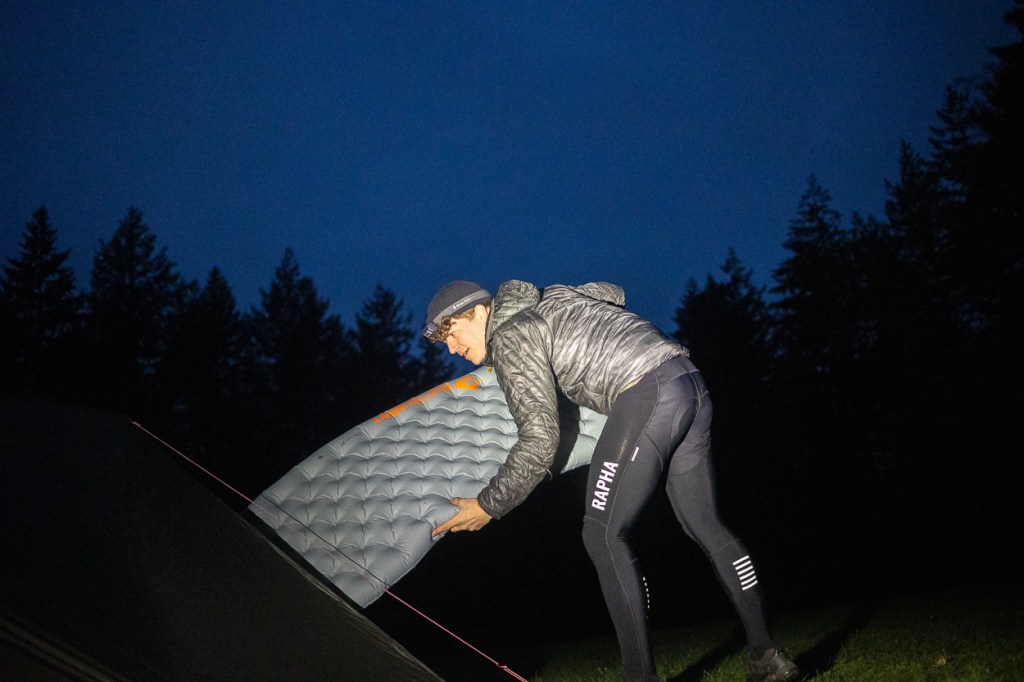
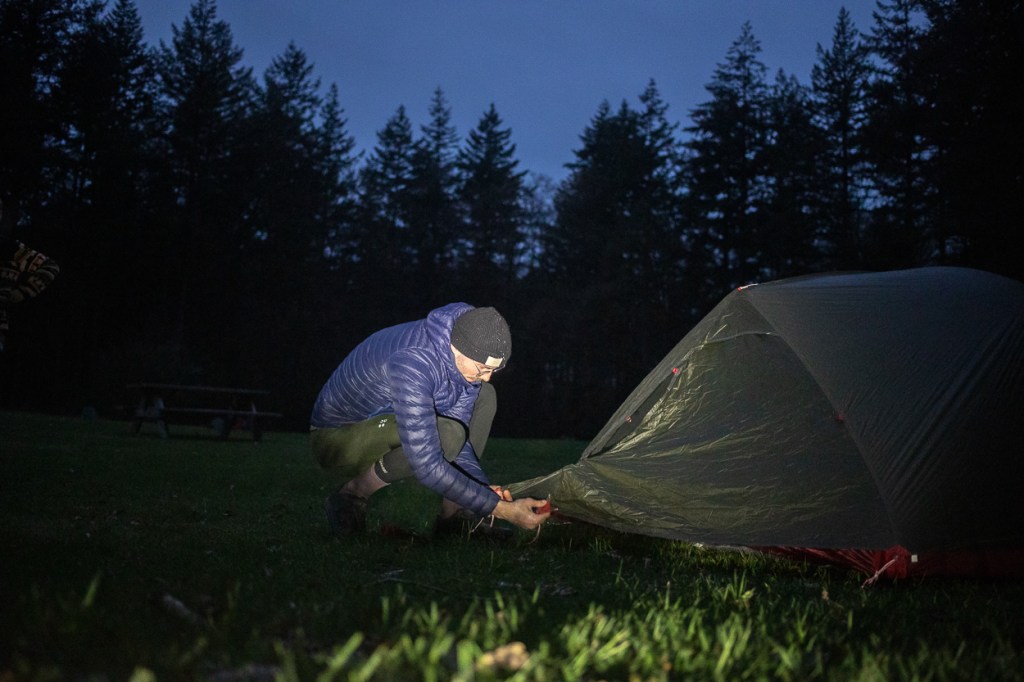
The natural campsites ‘natuurkampeerterreinen‘ managed by De Groene Koepel are perfectly located along the Green Divide route and offer the best nature bikepacking experience on the way. Some of them have “trekkersvelden” (basic pitching field for hikers/cyclists). At these trekkersvelden, you can often pitch your tent without a reservation, even in peak season. You do need a Natuurkampeerkaart (camping card) to be able to sleep in these campsites, which you purchase once for the entire calendar year and which is immediately valid for up to four people.
Klein Groenbergen, Leersum (KM 70, off the route)
This natural campsite is located a few kilometres off the route. Relatively early in the route, this campsite is mainly suitable for those taking four or more days to complete the ride, or for those starting later in the day.
Quadenoord of De Bosbeek (KM 105, on the route)
These two natural campsites are located close to each other and right on the route. They are perfectly situated for a first overnight stop if you are riding the Green Divide in three days.
Zegenoord (KM 155, on the route)
This natural campsite on the Loenermark near Loenen always has space for small tents on the large trekkersveld. The site is located exactly halfway along the route, making it ideal if you are riding the route in two days.
Zanderdennen (KM 185 – off the route)
This natural campsite is located a few kilometres off the route, just after Radio Kootwijk, and is mainly suitable for those cycling the route in three or four days as a second or third overnight stop.
Drie (KM 213 – closeby the route)
Close to the route is the charming natural campsite Drie, located in the hamlet of the same name in the middle of the Speulderbos. In terms of distance, it is perfectly situated as a second overnight stop for those riding the route in three days.
For those who prefer to go a little further (or if Drie is fully booked) you can try the Veluwse Bush Camp natural campsite after the Ermelose Heide (km 219).
De Toekomst (KM 268 – off the route)
Those taking four or more days to cycle the Green Divide can stop at the De Toekomst natural campsite in Emst. It’s also useful if you encounter setbacks along the way and can’t make it to Zwolle before dark, serving as an extra overnight stop. The campsite is a few kilometres off the route, around km 268.
There are several other campsites near the route that regularly welcome Green Divide cyclists. Personally, I always prefer the true nature experience offered by the natural campsites mentioned above.
Hotels, B&Bs, and ‘Natuurhuisjes’
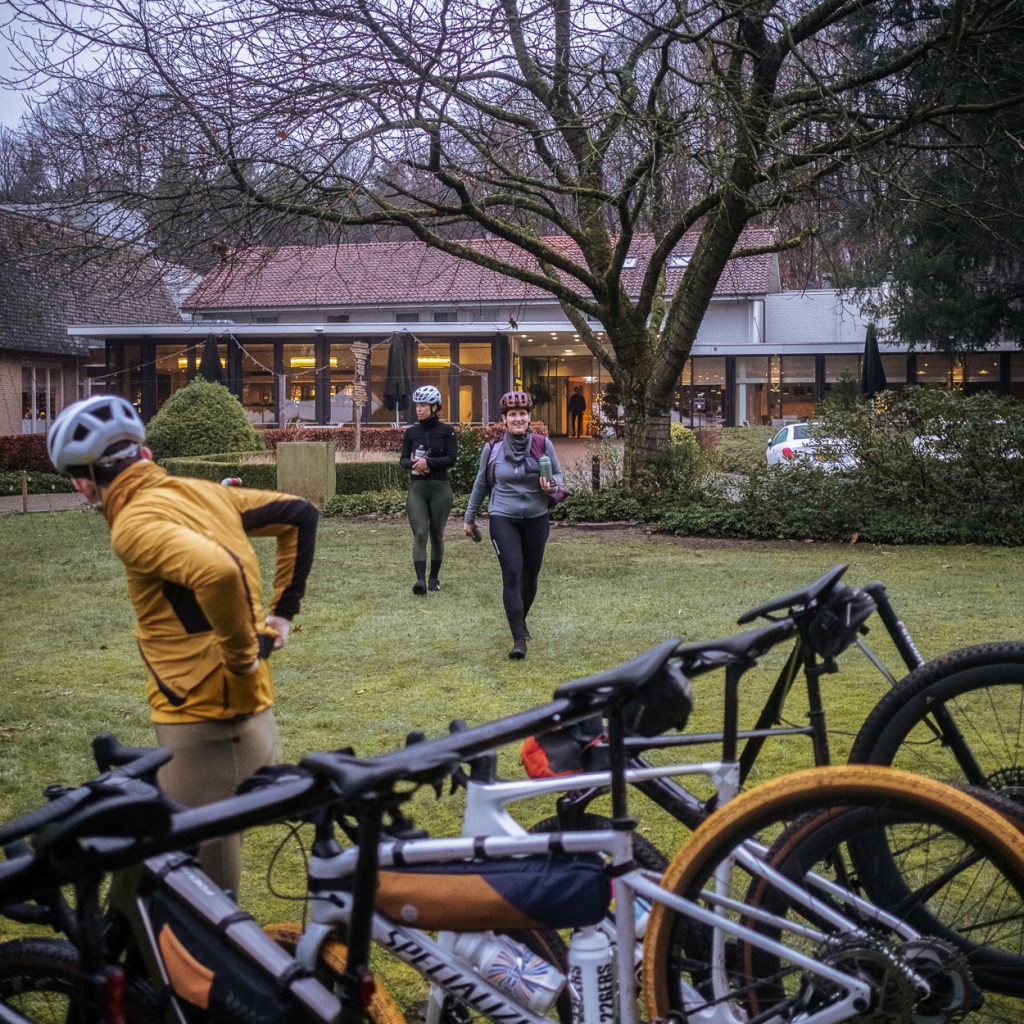
Even if you prefer a roof over your head, it still counts as bikepacking. In addition to hotels, there are plenty of B&Bs and holiday homes (Natuurhuisjes) that are cyclist‑friendly. Proven cyclist‑friendly options along or near the route include Hotel de Loenermark in Loenen, with their special Green Divide bikepacking package, an excellent choice right at the midpoint of the route.
If you leave the route southwards in Garderen after 206 km, a few kilometres further on you can stop at Far‑Out, a guest house offering a special Green Divide package. Directly on the route when leaving Garderen, Bilderberg Hotel ’t Speulderbos has also proven to be cyclist‑friendly.
For those who prefer to stay overnight in Zwolle at the end of the route, Hostel De Basis, right above Bennies (see food & drink), is a definitely recommended cyclist‑friendly option.
Other Overnight Options
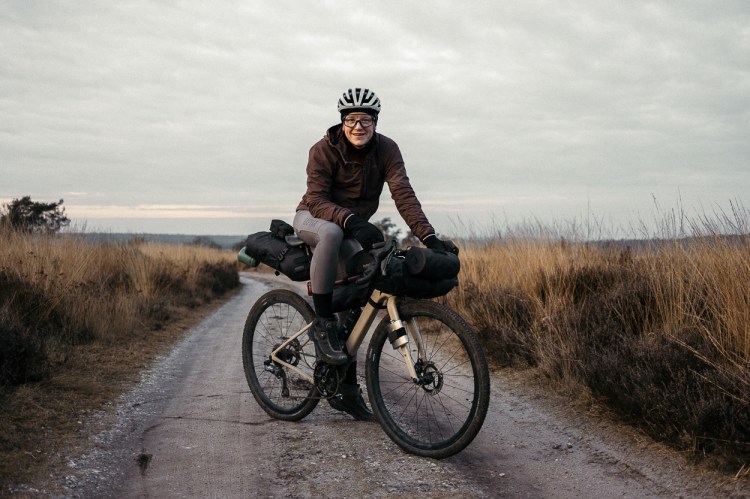
There are also alternative ways to spend the night during your Green Divide adventure. For example, the Dutch website ‘Vrienden op de Fiets’ allows members (€7.50 per year) to find a place to stay for a modest fee (from lodge room to garden house, always hosted by fellow cyclists). There’s also the free of charge ‘Warmshowers’ platform, which works like a cyclist-focused couchsurfing network. As a member of Nivon Natuurvrienden, you can also make use of Nivon overnight accommodations, such as Natuurvriendenhuis De Bosbeek or the ABK house near Eerbeek.
Do you have a great overnight experience that shouldn’t be missing here? Share it via Instagram or the contact form.
FAQ (Frequently Asked Questions)
Here are the answers to the most frequently asked questions. Missing the answer to an important question? Ask it via Instagram @green.divide or through the contact form on this website.
I don’t have Komoot. Can I get the GPX file?
No. The Green Divide is made possible in part by Komoot. For this reason, the most recent version of the route can only be saved and downloaded via their platform. You can easily create a free profile at Komoot.com.
What is the difficulty level of the Green Divide?
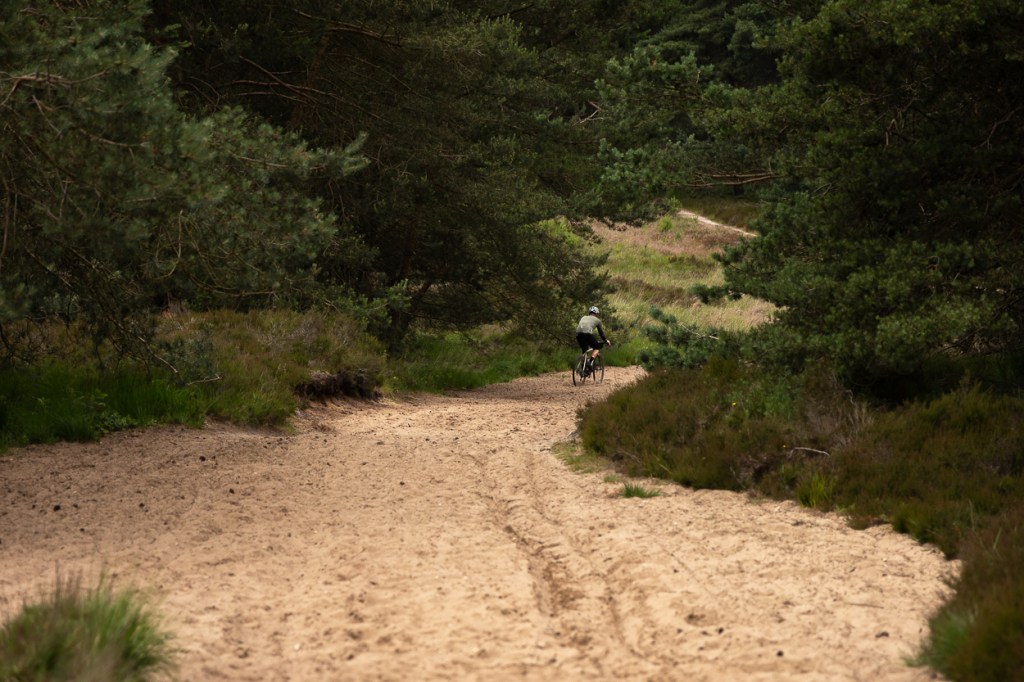
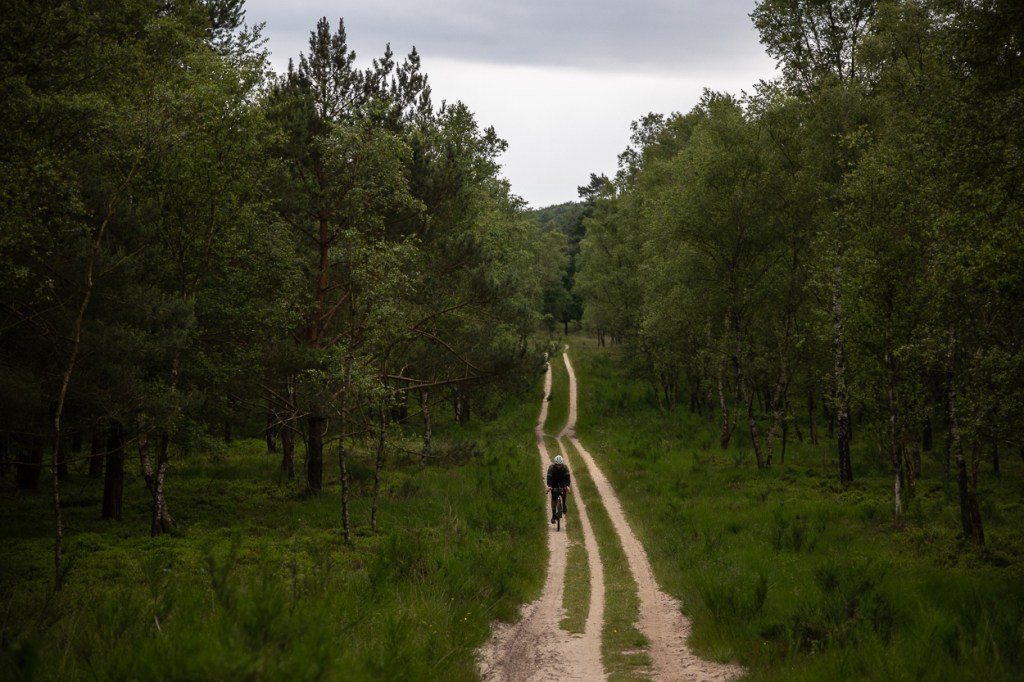
The Green Divide is not extremely technical, but the combination of distance (300 km), unpaved and sometimes loose surfaces (there’s more sand than you think), elevation gain, and, of course, the weight of your bikepacking gear makes it a challenging ride by Dutch standards. Forest maintenance works and weather conditions, such as rain or drought, can further affect the difficulty of the ride.
A solid base level of fitness is therefore required to cycle the Green Divide. Experience with off‑road cycling will certainly help along the way.
What’s the Brown Divide? When do you ride it?
Annually from 15 September until 24 December, instead of the Green Divide, the Brown Divide should be cycled. This is due to seasonal closures in Kroondomein het Loo (Crown Estate). The Brown Divide is largely the same as the Green Divide, swapping only some paths in the central Veluwe to provide a legal alterernative that maintains the same overall distance.
Do you need an MTB permit?
No. The route does not use licensed MTB trails in the Utrechtse Heuvelrug or the Veluwezoom. Selected singletracks and official mountainbike routes in the route, such as those near Ede and Zwolle, can be cycled without a permit.
Can you ride the Green Divide in reverse?
Not entirely. Due to certain sections (such as the singletracks of the Ede MTB route), the route cannot be cycled in the opposite direction. In addition, cycling freely in those forests is not permitted, meaning you would have to ride part of your alternative route along a busy car road. In general, the experience and flow are much better when riding towards Zwolle, like intended.
Why isn’t the Green Divide a loop? Is there a way back to the start?
The route is deliberately designed as a cross‑section of the largest combined forest areas in the Netherlands: the Utrechtse Heuvelrug and the Veluwe, from point A to point B. To achieve this, I select the most beautiful legal trails, weaving through both forests. By the end of the route in Zwolle, you have fully explored the forests, so the route naturally ends there. Since the route starts at a train station, most people take the train back home afterwards from Zwolle.
Cycling back:
Planning a return route through the forest on different paths is tricky due to limited accessibility for cyclists. Outside the forest, you can cycle through the polders along Amersfoort. As this doesn’t fit the Green Divide experience, you can plan this yourself in Komoot.
Continuing onward:
Some people choose to keep riding towards the Sallandse Heuvelrug or Drenthe. It’s a beautiful area, but since it isn’t directly or indirectly connected to the Veluwe, this isn’t part of the Green Divide. Again, you can plan this yourself in Komoot if you wish.
What bike and tyres do you need for the Green Divide?
Although the route includes some gravel, the Green Divide is not a gravel route. It is an unpaved bikepacking route best tackled with a gravel bike or mountain bike.
I recommend tyres at least 40mm wide with some tread (e.g., Schwalbe G-ONE R). Even better are 45mm or even 50mm wide tyres. In the autumn and early spring, it’s worth fitting tyres with more tread (e.g., Schwalbe G-ONE RX).
Can you ride the Green Divide with a bike trailer?
You won’t be the first to cycle the Green Divide with a dog or child(ren). However, the unpaved route is sometimes technical and narrow, making it less suitable for standard trailers and bike carts. Special trailers, such as the Tout Terrain Singletrailer, are better suited for the route, though they do make riding more challenging.
We had a great experience. Can we thank you for the route?
Absolutely. I really appreciate feedback like that. In support of my efforts you can leave a contribution via ‘Buy Me a Coffee’. Thank you!
What others are saying about the Green Divide
“If you love cycling in nature, this route comes highly recommended.”
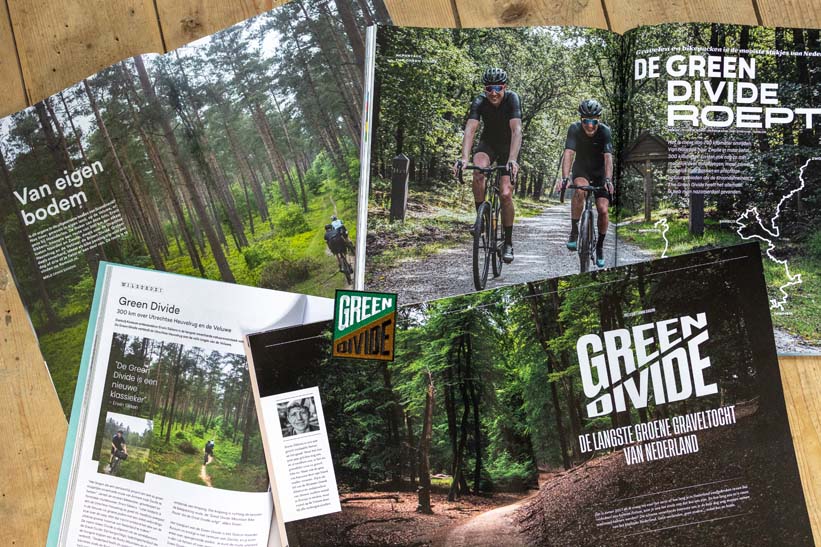
A lot has been written about the Green Divide in various national and international cycling media, magazines, and online. Although most are in Dutch, you can read more about the Green Divide in places such as:
Gravel Union (UK); Bicycling; GRIT! Gravel with Grinta! (BE); Velozine; Far Out (BE); Raw Magazine (ES); Fiets Magazine; Soul Cycling; 3opReis; RIDE Magazine; GRINTA! en Wielerflits.
Share your Green Divide Adventure!
Are you riding the Green Divide, the Brown Divide, or parts of them? Follow, tag, and collaborate with @green.divide on Instagram to share your adventure. Besides inspiration, I also post the latest updates about the route there, so you’ll always stay informed.
Enjoy your ride!
Erwin Sikkens
 erwinsikkens.com